Showing posts with label Environment. Show all posts

10 Devastating Natural Disasters

Natural disasters are terrifying, destructive and devastating forces of nature. They have affected millions of people over the course of history and have caused mess, mourning, grief, destruction and turmoil wherever they go. Despite this, there is still something that fascinates us about events such as these.

I decided to put a post together showing 10 devastating natural disasters that were truly horrific.
None of the photos present can ever give a true representation about how devastating these natural disasters really were.

1. 2004 Indian Ocean Tsunami
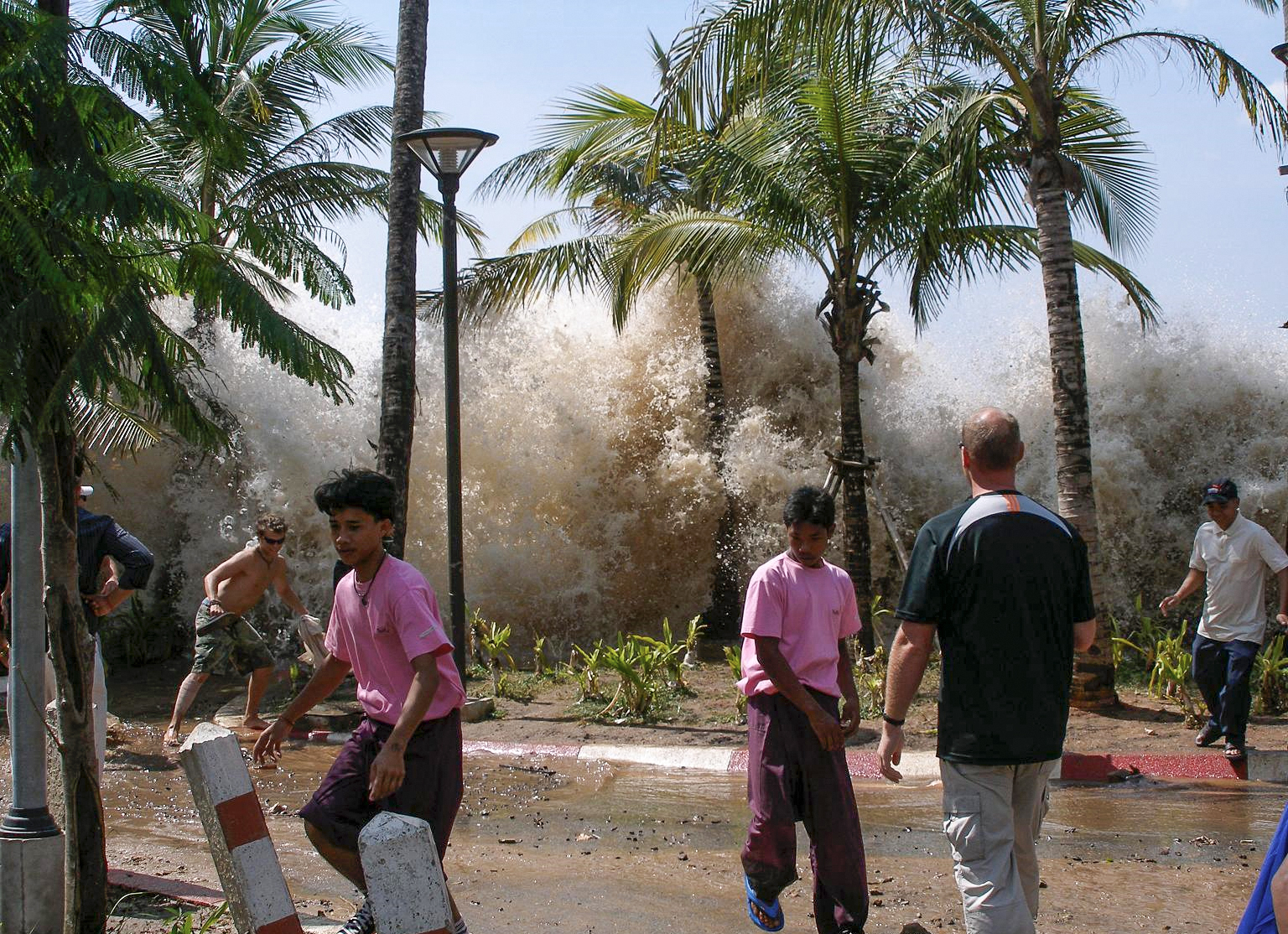
The Indian Ocean Tsunami took place on boxing day 2004. The huge 30m (98ft) tsunami was caused by an earthquake underneath the Indian Ocean, the epicentre being off of the west coast of Sumatra.
The magnitude of the earthquake itself was measured at 9.1-9.3, the third largest earthquake to ever have been recorded on a seismograph. The earthquake was so powerful and long-lasting that it was able to vibrate the entire planet by a centimetre, and caused other smaller earthquakes around the globe.

Indonesia was the hardest-hit country, followed by Sri Lanka, India, and Thailand. This monstrous force of nature claimed over 230,000 lives in fourteen different countries. More than $14 billion dollars were donated by the rest of the world in humanitarian aid.

2. Great Flood of 1931
The Great Flood of China was an absolutely devastating natural disaster that occurred in 1931. It is often referred to as the worst natural disaster in recorded history, and much more of the 20th century. 

Chinese sources say that the death toll was around the 145,000 mark, whilst most western sources place the estimation at around 3.7 - 4 million!
China had had heavier rainfall than usual that year than was usual, along with being hit with ten cyclones (the norm is 2 a year), and then saw the three major rivers: Yellow River; Yangtze River; and Huai River all flood.

3. Yellow River Flood
The Yellow River is one of the longest rivers in the world and is known for flooding. The 'Yellow River Flood' was a terrifying flood on the Yellow River in China, year 1887. The photo above is not from 1887, but is a photo of a yellow river flood. The flood of 1887 is considered it's worse, if not counting the Great Flood of 1931, but that involved other factors as-well.

The Yellow River Flood killed a massive number of people; around 900,000, and is one of the deadliest natural disasters to have ever been recorded.

4. Shaanxi Earthquake
 
The Shaangxi Earthquake is the deadliest earthquake on record. More than 97 countries were affected in the provinces of Shaanxi, Shanxi, Henan, Gansu, Hebei, Shandong, Hubei, Hunan, Jiangsu and Anhu, killing roughly 830,000 individuals.
The earthquake was so powerful that it destroyed a 543 mile wide area and in some of the countries that were affected, as much as 60% of the total population was killed. Despite the earthquake being the deadliest, it is not the most powerful; modern estimations say that it was a 7.9 on the Richter scale.

5. Tangshan Earthquake
 
The Tangshan Earthquake is thought to be the largest earthquake of the 20th century by death toll. The Chinese government stated that the death toll was 655,000, but this number has been revised and is now stated to be at 240,000 - 255,000, with 164,000 being recorded as injured.

A survivor of the natural disaster stated that "the buildings were made of cards", referring to how quickly the earthquake destroyed the buildings.
Chinese government state that the earthquake was a 7.8 on the Richter scale, but other sources believe it to be as high as 8.2. After 16 hours of when the Tangshan earthquake hit, another major 7.1 aftershock occurred, killing thousands of more people.

6. Cyclone Nargis
Cyclone Nargis was a tropical cyclone that became Burma's worst recorded natural disaster. 'Nargis' hit Burma on Friday, May 2, 2008, and upon impact immediately caused destruction and turmoil. It is said to have killed at least 138,000 people. The damage costs were at $10 billion dollars.

A year later, only 17,000 homes had been rebuilt out of the 375,000 houses. There have been estimations that at least 500,000 survivors (including 200,000 children) are living in make-shift shelters.

7. 2011 Tohoku Earthquake and Tsunami, Japan
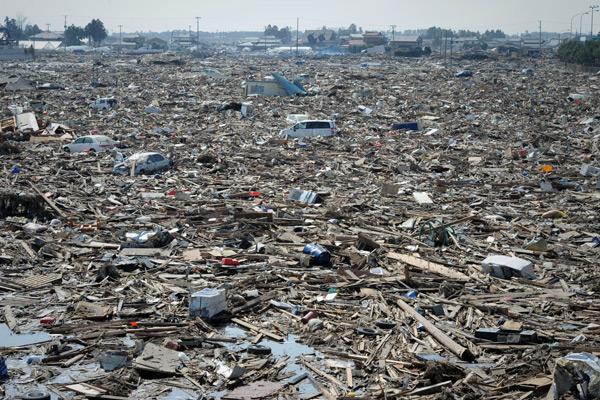
This is the most recent natural disaster to appear on this list as it only happened last year on Friday, 11 March 2011, Japan. The Tohoku tsunami was caused by an undersea megathrust earthquake (much like the Indian Ocean Earthquake) off of the coast of Japan, measuring at a 9.0 on the Richter scale. It was the most powerful earthquake known to have hit Japan, and one of the five worst earthquakes in the world since recording in 1900. 

The earthquake-triggered tsunami was at a towering 40 metres when it made contact with Japan. The tsunami killed 15,854 people, injured 26,992, caused 3,155 people to go missing, destroying 129,225 buildings, with an extra 254,204 buildings being half-collapsed and 691,766 buildings being partially damaged.  It also caused a number of nuclear accidents, primarily the ongoing level 7 meltdowns at three reactors in the Fukushima Daiichi Nuclear Power Plant complex, affecting thousands of residents.
The World Bank's estimated economic cost was $235 billion US dollars, making it the most expensive natural disaster in world history.

8. 1815 Tambora Eruption
The 1815 Tambora Eruption was the most powerful volcanic eruption in recorded history, being classified as a VEI-7 event, Ultra-Plinian.  The eruption affected a 100 km³ area, followed by steaming that lasted from 6 months - 3 years, with smaller eruptions as well.

9. 1958 Lituya Bay Megatsunami

The 1958 Lituya Bay megatsunami was the result of an earthquake that triggered a landslide that caused 30 million cubic meters of rock and ice to fall into the inlet of Lituya Bay, Alaska, occurring on July 9, 1958.

The wave that was recorded was said to make the Lituya Bay Megatsunami, the largest known in modern times. It was said to have been hundreds of metres high and was actually measured at having washed 524 metres up the opposite slope of the inlet. That's over three times as high as the empire state building.

10. Bhola Cyclone
Credit: E.C. Barrett's Climatology from Satellites
The 1970 Bhola Cyclone like Cyclone Nargis was an extremely powerful tropical cyclone the hit then East Pakistan (now Bangladesh). 'Bhola' was the sixth cyclonic storm of the 1970 North Indian Ocean cyclone season and was it's most powerful reaching a strength equivalent to a strong Category 3 hurricane.
In fact, it is the worlds deadliest cyclone to have ever been recorded killing up to 500,000 people.

I don't claim ownership or credit for the pictures present, all credit is reserved for the original owners. No copyright intended, if you have an issue with a picture that is present, then please contact me.

How to De-clutter your House

It's often said a man's house is his castle, and with some of the amount of clutter we manage to squeeze into them, we'd need a castle to house it all. 

It's easy to have the urge to hoard things, it's okay - we all do it from time-to-time. However, there are those times when we just let things get out of hand, and deciding to keep one bit of clutter turns into keeping 100 bits of clutter, we know then that we need to do something. 

There's recently been a series on the television my mum's been watching and people I know have been watching. It's called 'The Hoarder Next Door' (channel 4), and it deals with individuals who just hoard clutter and can't bear to throw any of it away. One interesting thing that was brought up, was that hoarding is becoming increasingly more common, and more and more people are filling there homes with clutter, only to not be able to de-clutter at a later date.

1. Designate Places

Clutter doesn't always form in the shape of rubbish or something that is brought into the home, but can be items that are just out of place. When an item is not in its usual home, it becomes clutter. Anything that is getting in the way and is not supposed to be where it is, is clutter. 

For example, if my toothbrush was left by my workspace, it would be of no good to me there and would only get in the way. Therefore, becoming clutter.

Having set places for things is a great way to help you organise your home to how you want it to be. You can have somewhere for your keys, somewhere for paperwork, somewhere for shoes, etc. The list goes on. It also saves you the hassle of having to search the whole house because your wallet/purse has been buried amongst the mess.

2. Step-by-Step

When wanting to de-clutter your house, I will agree, can be an overwhelming prospect. So instead, decide to focus on a small area of the house everyday and aim to fully de-clutter it. This can be in the form of a cupboard shelf or a whole room, the choice is yours. 

I know someone who used this technique because they didn't have the time to spend de-cluttering the whole house. So when de-cluttering, they started with the kitchen and did one cupboard a day. At the end of a fortnight, all kitchen cupboards had been effectively de-cluttered. 

The key is consistency. A great motivational technique you may consider for this method (and one that I personally use), is the 'don't break the chain' rule.

3. Timeboxing

As-well as the 'don't break the chain' tip, another effective, motivational, productive technique, is timeboxing. I won't go into in this post as I've already written a previous post about it here: What is timeboxing?

4. Pick and Move

Take it upon yourself to move ten items a day back to there original place, or find them a new place, or throw it away. It may only be ten things, but by the end of the week it's added up to a respectable seventy. 

5. Be decisive

In a lot of places where advice is given about how to de-clutter your house, a common tip that comes up is to create a 'maybe' place. The idea behind it being that you can decide what to do with certain items later on. 
Whilst this is a good idea and I can see the logic behind it, when it comes to something as big as your house, I would have to argue that it's a hindrance. The reasons being, the things that you aren't sure about are most likely going to become clutter once again. 
Also, once you start placing items there, there is going to be a temptation to place items there too often, leaving you with the dilemma of how to sort them out.

So try your best to be as decisive as you can. Normally quick snap decisions are the best route to go down.

6. Schedule De-cluttering days

This is similar to point #2, but instead of doing a chosen spot, dedicate a whole day to de-cluttering your house. Maybe it's every Saturday each week?, maybe every Wednesday every fortnight? Whenever it is, just make sure that your committed enough to seeing it through. 

7. Clutter-free zones 

The aim of this tip is to eventually get your whole house clutter-free. First you start off with a small space, lets say the dining room table for example. From now on, no clutter whatsoever can be placed there. 

At the start, it will probably slip your mind a couple of times, but if you're stern with yourself, you'll notice that you'll soon be in the habit of placing things elsewhere instead of that once-messy table. Then once it's ground in enough, choose another small space in the house and make that your second clutter-free zone. 

While this is a slow process, as you need to personally get used to not giving in to bad habits, that's a reason it's so effective. It gets you to start treating clutter in a different light. After you complete the first few clutter-free zones, it will become progressively easier to stop cluttering.

8. Just throw it

This is the hardest thing about de-cluttering. We convince ourselves that each bit of clutter will have its use one day and that we will need to keep it for then. In reality, within five minutes of it being thrown, we've more than likely forgotten about it. 

If we do then keep something that we ought to throw away, that will only lead to bad habits. It may only seem like one thing we're keeping, but once we make the exception, we then make lots of exceptions, and by the end haven't really gotten any further than where we'd started.

Top 10 Famous Gardens

Gardening is a great form of work and is a much loved hobby for many people. Having a look at some of the most famous gardens around the world, doesn't half make our gardens look bad. :)

Hours of work each day put in by many dedicated people, is what it takes to not only get a garden up to this level, but also to maintain it at this high standard.
Here's my list of the top 10 famous gardens.

1. Versailles, France
The Versailles gardens are located in France, and occupy some of what once was the royal demesne of the château of Versailles. The gardens cover 800 hectares of land (1976 acres), and receive over 6 million tourists every year.
In the gardens of Versailles, there are approximately; 200,000 trees, 210,000 flowers planted annually, 620 jets of water, and 50 water fountains.

The garden, when having the fountains and jets switched on, uses roughly 1.6 million gallons of water per hour, using aqueduct d'Arcueil to bring in enough water from surrounding springs.

2. Huntington Botanical Gardens, USA
The Huntington's botanical gardens was set-up in 1903 by Henry Huntington and cover 120 acres, with a theme throughout the gardens containing rare plants from around the world.

40 Gardeners, a curatorial staff of 7, and more than 100 volunteers maintain the botanical collections, provide interpretive programs for visitors, and propagate plants for special sales.
The gardens contain a vast amount of plants, around 14,000 in fact, all of which are showcased for visitors to see.

3. Viceroy's Palace Garden, India


The Viceroy Palace Gardens are situated in New Deli, India. It is one of the most beautiful gardens on this list in my opinion, the garden is covered in vast flowery areas and delicate lanes of grass separated with fountains.

The garden was designed inspired by Mughal example. This garden is much more intricate and richly planted than any real Mughal garden, the result is a fusion of old India and old England.

4. Garden of Cosmic Speculation, Scotland
The Garden of Cosmic Speculation is at Portrack House, near Dumfries in South West Scotland, created by Charles Jencks. The inspiration for the 'Garden of Cosmic Speculation' came from mathematics and science, with landscaping and sculptures themed. For example; black holes and fractures.

The garden sets mathematical formulae and scientific phenomena in a setting which combines natural features, artificial symmetry, and curves. The garden does not contain lots of flowers as other gardens do.

5. Suan Nong Nooch, Thailand
Nong Nooch Tropical Botanical Garden is a 500-acre botanical garden and tourist attraction, situated in the Chonburi Province, Thailand.

The land where the garden lies was bought in 1954, with original intentions of developing it as a fruit plantation. The owners instead, decided to change it to a wildlife conservation project, planting a range of tropical plants and flowers.

The amount of land originally purchased was 600 acres, with the garden being in 500 of those acres, so there is still room to grow. 

6. Butchart Gardens, Canada
The Butchart Gardens is a group of floral display gardens in Brentwood Bay, British Columbia, Canada. The garden began in 1904, owned by Jennie and Robert Pim Butchart.

Some statistics about the garden are; the garden covers 22 hectares - all of which is open to the public, there are 50 full-time employed gardeners and 12 additional part-time gardeners that help maintain the garden, there are 26 green houses, it has a staff complement of around 550 in the peak season, and the garden receives roughly 1 million visitors every year.

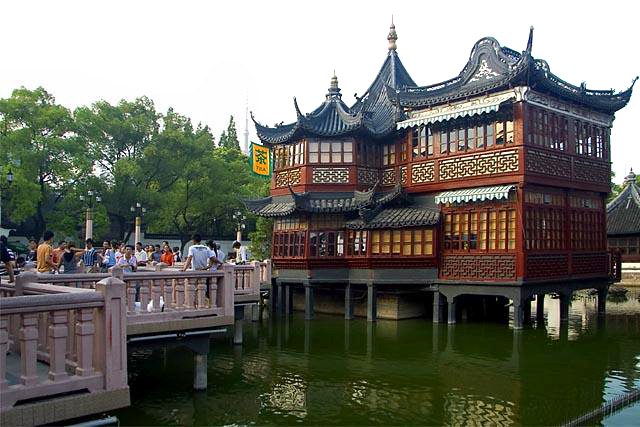
7. Yuyuan Garden, China
Yuyuan Garden (or Yu Garden) is an extensive Chinese garden located northeast of the Old City of Shanghai, China.
Yuyuan Garden was first conceived in 1559 during the Ming Dynasty by Pan Yunduan as a comfort for his father. The gardens construction was completed in 1977, the largest and most prestigious of its era in Shanghai, but eventually its expense aided to the ruin of the Pans.

In this present day, Yuyuan Garden occupies an area of 2 hectares, and is divided into six areas separated from each other by 'dragon walls', laid out in the Suzhou style.

8. Shalimar Garden, Pakistan
Shalimar Garden is a Persian garden, being built during the 16th century by the Mughal emperor Shah Jahan in Lahore , modern day Pakistan. The garden is laid out in the form of an oblong parallelogram, having a high brick wall surrounding it, which is famous for its intricate fretwork.

During the early 19th century, the gardens lost its prestige, when the Shalimar Gardens were used as stables during the reign of Sikh ruler Ranjit. The gardens were later reopened by the English and nowadays, is a much visited landmark.

9. Minneapolis Sculpture Garden, EAU
Minneapolis Sculpture Garden is one of the largest urban sculpture gardens in the country, with 40 permanent art installations and several other temporary pieces that are moved in and out periodically. The park covers 11 acres.
The centrepiece of the garden is the Spoonbridge and Cherry water sculpture designed by Claes Oldenburg and Coosje van Bruggen, husband and wife.

10. Keukenhof Gardens, Netherlands
The Keukenhof Gardens is the world's largest flower garden boasting a massive approximation of 7,000,000 (7 million) flower bulbs, being planted annually throughout the park. The park itself is 32 hectares big, so you can imagine how many flowers it takes to fill it.

The park has had over 40 million visitors in the past 60 years, it is the one of the most photographed places in the world, there are around 2,500 trees in 87 variates.

I don't claim ownership or credit for the pictures present, all credit is reserved for the original owners. No copyright intended and I am in no way profiting off of the images present . If you have an issue with a picture that is present, then please contact me.

Top 10 Longest Rivers in the World

What river is the longest river in the world? Rivers aren't easy to measure in length, what with all their twists and turns, but with the help of modern technology, we can get a pretty accurate measuring, so we can see which river is truly the longest. 

Now whenever I've heard people discuss this, the debate about whether the Nile or the Amazon is the longest river in the world, normally breaks-out. In this post that question has been answered, and it is the Nile which is the longest river, the Amazon does have other strengths that outclass the Nile however. 
Hope you enjoy. :)

1. Nile
Credit: MODIS/MODLAND/Discloitres, NASA
Miles: 4,132  
Kilometres: 6,650

The Nile is the longest river in the world, being found in Africa it runs through ten different countries. These countries are: Sudan, South Sudan, Burundi, Rwanda, Democratic Republic of the Congo, Tanzania, Kenya, Ethiopia, Uganda and Egypt.

The Nile consists of two major tributaries, the White Nile and the Blue Nile. The White Nile is the longer of the two.

The river plays an extremely important role in the lives of all those who live near-by, being the only source of water for a lot of the destinations it passes through.

The Northern section of the river, from Sudan to Egypt, flows almost entirely through desert.

2. Amazon
 Credit: Jeff Schmaltz, MODIS Rapid Response Team, NASA/GSFC
Miles: 3,976  
Kilometres: 6,400

The Amazon is the second longest river in the world, but is by far the largest by water-flow with an average discharge greater than the next seven largest rivers combined (not taking into consideration the tributaries of the Amazon, Madeira and Rio Negro). 

The Amazon also has the largest drainage basin in the world and it accounts for 1/5 of the worlds river-flow.
I've always seen the Amazon and the Nile as rivals. :)

During the wet season the Amazon rivers width can become a staggering 30 miles or more! The Amazon floods its banks every year.
In some parts of the Amazon, the depth is as much as 100m (330ft).

3. Yangtze
Credit: NASA
Miles: 3,917
Kilometres: 6,300

The Yangtze is the longest river in Asia. It travels across the glaciers on the Tibetan Plateau in Qinghai eastward across central and eastern China before emptying into the East China Sea at Shanghai.
The Yangtze drains one-fifth of the land area of the People's Republic of China.

The Yangtze river (along with the yellow river) has been the most important river in Chinese history.
Beginning in the 1950s dams and thousands of kilometres of dyke's were built for flood control, land reclamation, irrigation and for the control of diseases vectors.

4. Mississipi
Credit: NASA
Miles: 3,902
Kilometres: 6,275

The Mississippi river is the main river of the largest river system in North America. For the entirety of its run, the Mississippi runs just through the United States, but does have its drainage basin reach into Canada. 

The Mississippi has over 260 species of fish, which equates up to 25% of all fish species in North America, and 60% of all North American birds (326 species) use the Mississippi River Basin as their migratory fly-way.

Formed from thick layers of this river's silt deposits, the Mississippi River Valley is one of the most fertile agricultural regions of the country.

The Mississippi River's depth ranges from less than 3 feet at the headwaters in Minnesota, to the deepest section between Governor Nicholls Wharf and Algiers Point in New Orleans where it is around 200ft deep.

5. Yenisei
Miles: 3,445
Kilometres: 5,539

The Yenisei river is the largest river system flowing to the Arctic ocean. Out of the three main Siberian rivers that flow into the Arctic ocean (the other two being the Ob River (number #7 on this list) and the Lena River), the Yenisei is the central and largest one.

The average depth of the river is 14 metres (45ft) and the maximum depth is 24 metres (80ft).
The source of the river is Hangayn Mountains, Central Mongolia, and the mouth of the river is Kara Sea, Arctic Ocean. The Yenisei flows through Mongolia and Russia.

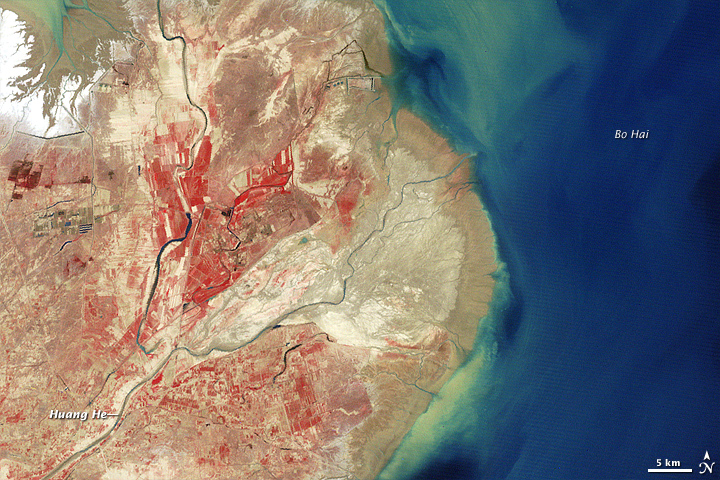
6. Yellow River
Credit: NASA
Miles: 3,395
Kilometres: 5,464

In at number #6 on the list, is the Yellow river, originating in the Bayan Har Mountains in Qinghai Province in western China, it flows through nine provinces of China and finally empties into the Bohai Sea. It is the second longest river in China after Yangtze.

It has been given the name 'China's sorrow' because of its tendency to overflow its banks and change its course. It has, up to present, overflowed its bank over 1,600 times, having changed its course 26 times.

Deforestation, wasteful use of water and drought conditions, are all factors to the dying of the river, experts have even considered the possibility of diverting water from the Yangtse to the Yellow river.

7. Ob
Credit: Jeff Schmaltz, MODIS Rapid Response Team, NASA
Miles: 3,364
Kilometres: 5,410

The river Ob is a major river in western Siberia, Russia. It is the westernmost of the three great Siberian rivers that flow into the Arctic Ocean (the other two being the Yenisei River (number #5 on this list) and the Lena River).
The river is used for drinking, irrigation, fishing and hydroelectric energy by the people around the river.

There are more than 50 different kinds of fish in the Ob and most of them are very valuable for the fishermen.Some of these include: taimen, graylyng, pike, perch, pike-perch, dare, roach, common bream and orfe.

8. Paraná
Credit: NASA
Miles: 3,030
Kilometres: 4,880

The Paraná River is a river in south Central South America, running through Brazil, Paraguay and Argentina. It is the second largest river in South America, the first being the Amazon.
Flooding is common on the southern Paraná, with also many waterfalls and a large dam built in the 1980s.

There are two sources of the Paraná river, the first being the junction of Paranaiba, and the second being Rio Grande Rivers. The mouth of the river is at Rio de la Plata.

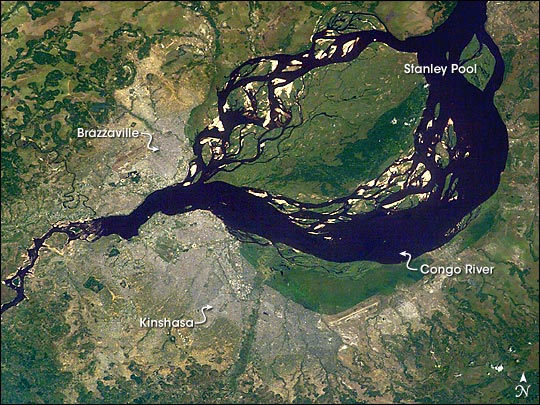
9. Congo
Miles: 2,922
Kilometres: 4,700

The Congo river is the deepest river in the world, being measured at depths in excess of 220m (720 ft). In terms of volume of water discharge, it is the third largest river, but in length is 9th. The river lies in Africa.

The Congo River is the main transportation source in Central Africa. Along with all the streams that lead into the Congo, over nine thousand miles of navigable shipping routes in Central Africa are provided. A huge amount of goods are transported on the river every day.

On average one million four hundred thousand cubic feet of water flows into the Atlantic Ocean every second from the river.

10. Amur
 
Miles: 2,763
Kilometres: 4,444

The Amur river is found in Asia, forming the border between the Russian Far East and Northeastern China. The Amur is the largest undammed river in the world.

The area in and around the Amur River is home to 95 percent of the world's Oriental white stork, along with a vast amount of other storks and cranes. 
The mouth of the river is Tartar Strait (Pacific Ocean).


I don't claim ownership or credit for the pictures present, all credit is reserved for the original owners. No copyright intended and I am in no way profiting off of the images present . If you have an issue with a picture that is present, then please contact me.

10 of the Rarest Flowers in the World

Its no doubt that spring and summer bring about some very vibrant and attractive colours.

The insects and wild animals are out-and-about, and a whole host of flowers and plants become alive. So in this list, we look at some rare flowers, whose future seems uncertain. In fact the only chance you may have to have a glimpse at some of these, is through that of a photo.

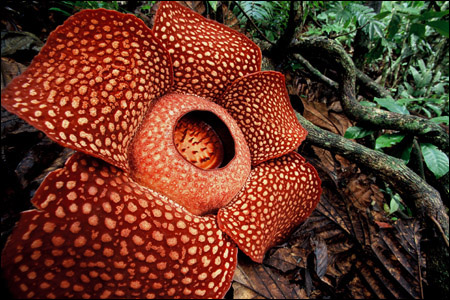
1. Corpse Flower
This interesting flower is the largest individual flower on earth. Occurring in Indonesia, it was nationally considered a rare flower in 1993. 

Months can pass while the flower buds, after reaching bloom, the flower will last for roughly a week before dying. Because of this, the flower can be particularly hard to locate.


2. Franklin Tree
A very rare plant, the franklin tree is the sole species in its genus, and is native to the Altamaha River valley in Georgia in the south-eastern United States.

All the Franklin trees known to exist today are descended from the seed collected by William Bartram (who saved the species from going extinct in the wild) and propagated at Bartram's Garden in Philadelphia.

They can grow up to a height of 10m, and the seed capsules take 12-14 months to mature, with the plant then living up to and over 100 years.

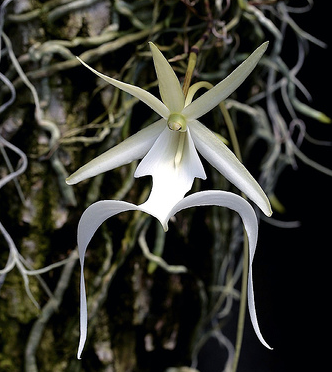
3. Ghost Orchid
The ghost orchid is a rare plant and is not to be confused with the Eurasian ghost orchid.

The flower was thought to be extinct for a period of nearly twenty years, until recently when it was rediscovered. It is an endangered species and is close to impossible to propagate.

It has no leaves and doesn't use photosynthesis, it needs a specific fungus to be in close contact with its root system for nourishment.

It only blooms when conditions are just right, making this a very elusive flower to find.

4. Middlemist Red
Despite its name, the middlemist red is actually bright pink, and is probably the rarest flower in the world. There are only two known specimens left: one in Britain and one in New Zealand.

The one in Britain was imported from China some 200 years ago by a British Gardener named John Middlemist (whom the plant got its name from).

At the time of John Middlemist, the plant was sold to members of the public as-well, so it is very possible that someone could have one in his/her garden.
The plant has since been totally wiped out in China.

5. Cape Sundew
The cape sundew is a carnivorous plant that is native to the Cape of South Africa. The sundew is covered in many sticky tentacles that are used to trap arthropods.

When prey lands on this plant, the leaves roll towards the centre having as much contact with it as possible, which aids in digestion. The process is relatively quick, lasting for about thirty minutes.

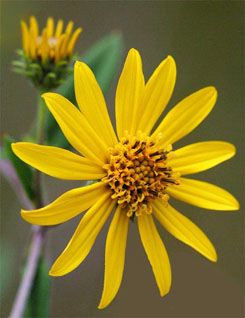
6. Schweinitz's Sunflower
Schweinitz's sunflower is one of the rarest flowers, with only 90 known populations left, many of which contain less than 40 flowers. The species is named after its discoverer, the clergyman and botanist Lewis David von Schweinitz.

The plant can grow from one metre up to four metres, and flowers for two to three weeks in early October.

7. Seven-Son Flower
The seven son flower is native to China and can also be found in non-desert areas of the United States.

The flowers start to blossom in late summer, turning fuschia that last well into the autumn. The pale, peeling bark can be exposed by pruning the lower branches of the interior.

It is a popular ornamental plant that gives off an intoxicating aroma.

8. Showy Lady's Slippers
The showy lady's slipper, can also be called the queens slipper or the pink-and-white-lady's slipper.

While the plant has never been common, it has vanished from much of its historical range as a result of habitat loss. Its habitat is restricted to the north-east region of the United States and the south-east regions of Canada.

Charles Darwin took an interest in the plant for a number of years, and like many - he was unsuccessful in cultivating the plant.

9. Wild Blue Lupine
The wild blue lupine can stand at 0.3-1.5m tall, and as a result of the revolution of industrialisation, the species is on the decline. It is estimated that the number has dropped 90% since 1900.

The remaining habitat is commonly fragmented, and so limits the range the plant can reproduce.

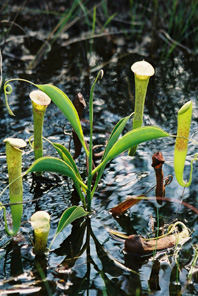
10. Nepenthes Tenax
The nepenthes tenax is a species of the lowland tropical pitcher plant. The plant grows to a height of around 100cm and has a self-supporting stem. 

It is a carnivorous plant that can eat small rodents such as a rat. All pitcher plants feed on insects, with anything more complex and of greater size results with the death of the plant. However, this seems to be the exception.


I don't claim ownership or credit for the pictures, all credit is reserved for the original owners. No copyright intended, if you have an issue with a picture that is present, then please contact me.
Older Post ►
 

Copyright 2011 Smart Blogging is proudly powered by blogger.com